Susquehanna Discovery Center Project – Public Participation Opportunity!
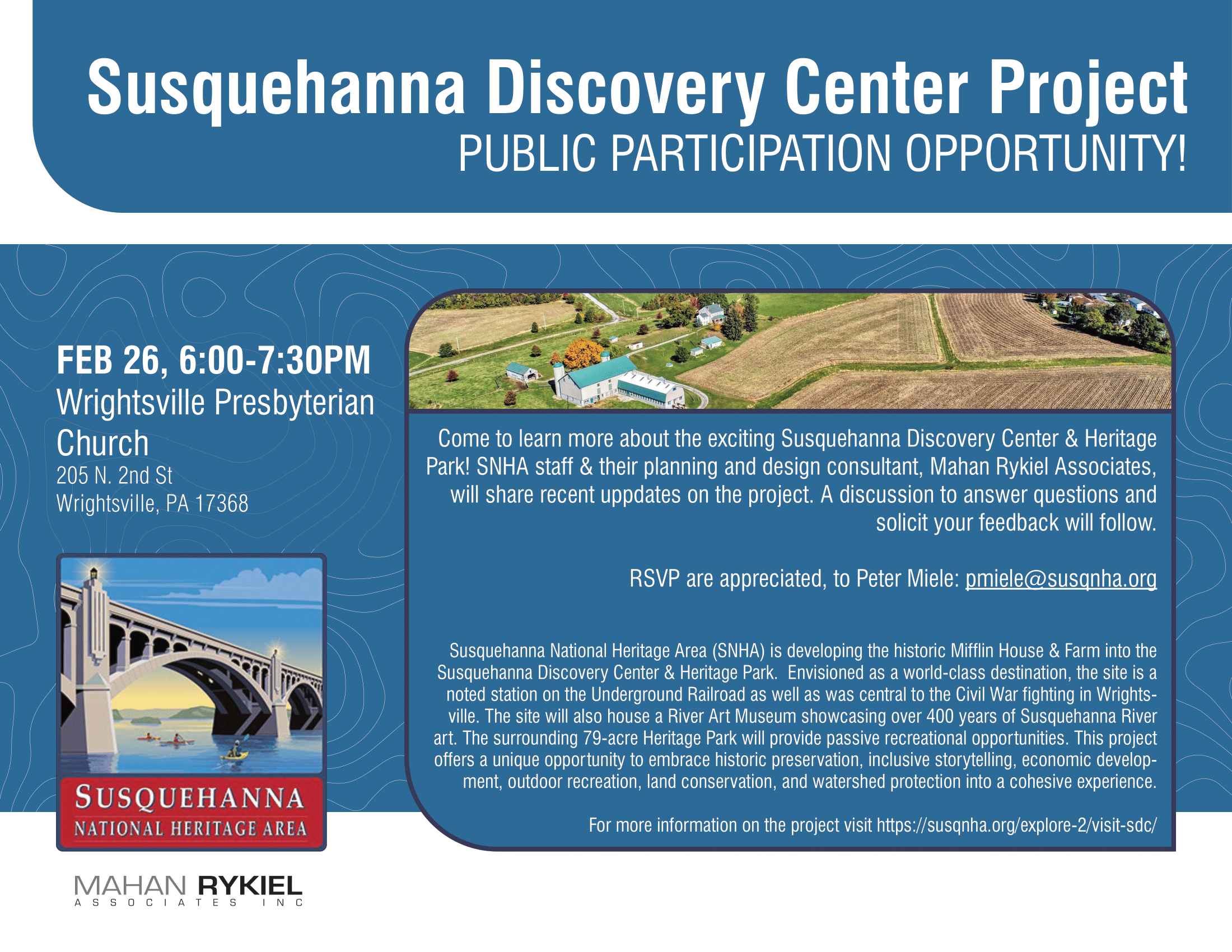
Come Learn about the exciting Susquehanna Discovery Center & Heritage Park!
Date & Time: February 26, 6:00-7:00 PM Location: Wrightsville Presbyterian Church, 205 N. 2nd St, Wrightsville, PA 17368
The Susquehanna National Heritage Area (SNHA) team and their design consultants, Mahan Rykiel Associates, will share recent updates on the project. There will be a discussion to answer questions and solicit your feedback to follow. Click here for our latest project update
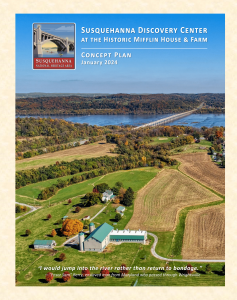
Susquehanna Discovery Center & Heritage Park
January 2025 Project Update
Pete Miele, Senior Project Leader
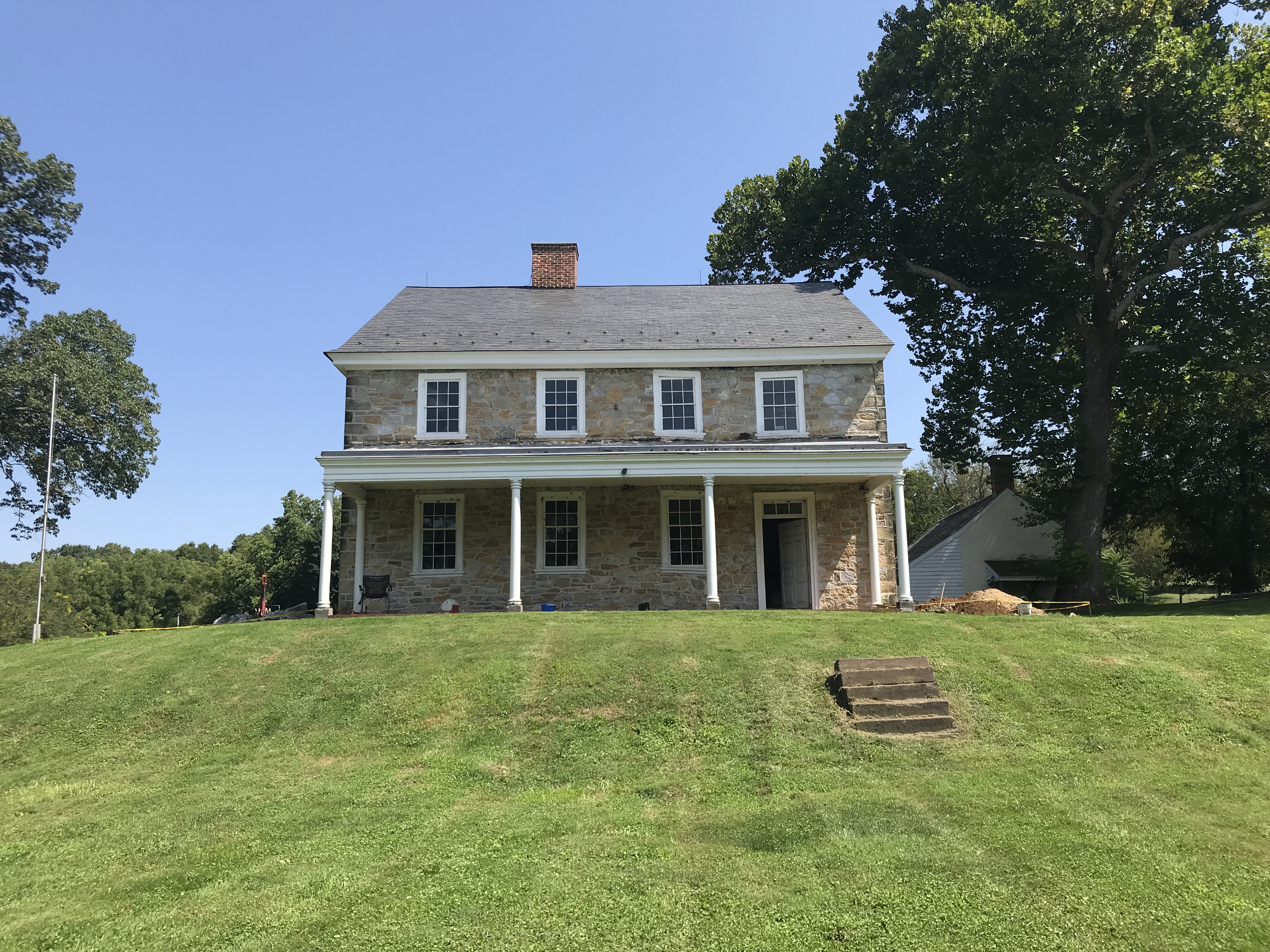
As we embrace the start of 2025, we’re thrilled to share the latest updates on our journey to transform the historic Mifflin House and Farm into the Susquehanna Discovery Center & Heritage Park, a vibrant hub of history, art, nature, and community engagement.
With the benefit of warm weather in November and early December, our initial public access improvements, initially, progressed quickly. As I write this, however, I am gazing out my window at the snow-covered ground, reminding me that it is still winter out there. The new driveway, parking area, and walking paths have all been graded and stoned, and now we are just waiting on paving. This will be completed once we have a few warm days in a row. We fully anticipate that the site will be ready for visitors by late winter or early spring. This vital step ensures that our community can soon experience the historic Mifflin property firsthand, laying the groundwork for engaging programs and events.
As we finish these improvements, we are turning our attention to the initial visitor experiences on the site. In December, we applied for a grant to develop interpretive panels and an orientation film that will help bring the site’s rich stories to life. This is just the beginning of our efforts to make the Susquehanna Discovery Center & Heritage Park an immersive and educational destination. In addition, we’re preparing an application for a National Endowment for the Humanities (NEH) grant to create a comprehensive interpretive plan for the site, weaving the Discovery Center, River Art Museum, Underground Railroad Learning Center, and Heritage Park together. This plan will ensure the stories of the site are thoughtfully and inclusively presented.
While public access construction wraps up, we are planning an exciting slate of public programs for summer 2025. From author talks to history and art presentations, we’re curating experiences that will connect visitors to the site’s compelling past and its relevance today. Stay tuned for details as we finalize the schedule.
The historic significance of the Mifflin House continues to inspire our preservation efforts. We are working with Becky Zeller, of Zeller Preservation, to finalize our application for listing in the National Register of Historic Places, with national significance. An SNHA team, headed by our Interpretive Specialist Barb Brundage, is completing an application to join the National Park Service’s Underground Railroad Network to Freedom. These designations will elevate the site’s national profile and cement its place as a beacon of resilience and freedom.
Amidst all this on-the-ground work, we are still deeply engaged in our Master Planning & Interpretive Framework process. We are now more than halfway done with this initiative, but there are still opportunities for public engagement. We invite everyone to join us on Wednesday, February 26th at Wrightsville Presbyterian Church (205 N. 2nd Street, Wrightsville, PA) to learn about the project and provide your input. Remember, we are designing this site for YOU.
As we continue on this journey, we thank you for your continued support. We look forward to welcoming you to the Mifflin Farm in 2025!
Susquehanna Discovery Center & Heritage Park
November 2024 Project Update
Pete Miele, Senior Project Leader
The Susquehanna Discovery Center & Heritage Park (SDC) project continued to make impressive strides during the last month. Master Planning and community engagement efforts are building momentum, laying out a vision that we hope will inspire locals and visitors alike.
In late October, our Master Planning consultants from Mahan Rykiel Associates (MRA) delivered presentations to our SDC Task Force, SNHA Board, and members of the community, gathering valuable insights to shape the future of this cultural landmark. The presentations centered on the project’s multifaceted goals, which include celebrating history, art, and the natural landscape. The public meeting welcomed input from more than sixty community members, eager to learn more about the project’s scope and goals. Attendees posed thoughtful questions about the integration of the SDC into Wrightsville and Hellam Township and its alignment with local heritage sites, such as York’s Goodridge Freedom Center and Lancaster’s Thaddeus Stevens & Lydia Hamilton Smith Center for History and Democracy. This collaborative spirit has reaffirmed our focus on creating a hub that honors diverse histories while offering a dynamic experience for repeat visitors.
On the ground, October marked a significant milestone with the commencement of initial construction efforts to enhance public access to the site. This long-awaited step includes the development of a driveway, parking area, and ADA-accessible pathway. These efforts are foundational in ensuring that visitors will soon be able to access this historic space safely and comfortably. We expect this initial infrastructure to be completed by years’ end, making way for guided tours and community events as early as spring.
Our River Art Work Group made strides toward integrating the River Art museum as part of SDC. This museum will highlight the influence of the Susquehanna River on American landscape art, preserving and celebrating the legacy of artists who have drawn inspiration from this majestic river. The group is discussing strategies to showcase a wide range of Susquehanna-inspired art that spans several centuries, depicting the natural beauty and cultural history of the region. One such strategy is to include a changing exhibit gallery, which will accommodate traveling exhibits and allow the museum to focus specific themes relating to the collection, as well as provide opportunities for ongoing community engagement. Over the next few months, we will work to develop an official name for the museum, as well as a case statement, guiding principles, and a mission and vision.
Looking ahead, we are excited to further refine the interpretive framework and design elements with MRA, aiming for a cohesive blend of educational programming, artistic engagement, and natural beauty that honors both the site’s historical significance and its future as a central Pennsylvania heritage destination. This month’s progress would not have been possible without the continued support from our dedicated partners and the community’s invaluable feedback. Together, we are shaping a space that will be a lasting testament to the Susquehanna region’s legacy and a beacon for future generations.
Historic Mifflin House & Farm Saved for Future Generations Preservation Celebration Marks the Beginning of Susquehanna Discovery Center & Heritage Park Development
Wrightsville, PA — On Friday, September 27th, Susquehanna National Heritage Area (SNHA) celebrated a significant milestone in the preservation of Pennsylvania’s heritage. More than 60 people gathered with SNHA staff at the historic Mifflin House & Farm for a Preservation Celebration & Initial Groundbreaking. This event marked the culmination of a seven-year effort to protect this invaluable site from development and set the stage for its transformation into the Susquehanna Discovery Center & Heritage Park—a project expected to span five to ten years.
The Mifflin House, a documented stop on the Underground Railroad, and the 160-year-old barn will be rehabilitated and eventually opened to the public as part of this expansive project. A museum showcasing an extraordinary collection of Susquehanna River art will have a home on the property, bringing to life the region’s rich cultural and natural history. The 79-acre landscape will feature walking trails interpreting the Underground Railroad and the Civil War battle that occurred in Wrightsville, a pivotal event in the 1863 Gettysburg Campaign.
Private, state, and federal sources have already committed more than $8 million to the projected $25 million development.
“This is a landmark moment for the preservation of not only our local history but also for the broader narrative of American history,” remarked Mark Platts, President & CEO of SNHA. “We look forward to working with the community to ensure the Mifflin House continues to be a beacon of cultural significance for generations to come.”
The first phase of development, set to begin this fall, includes the construction of a new driveway, 30 parking spaces, and an ADA-accessible pathway through the farmstead. These improvements will open the historic site to the public for the first time in more than 225 years, with preview tours expected to begin in spring 2025.
About the Susquehanna Discovery Center & Heritage Park
The Susquehanna Discovery Center & Heritage Park will be a world-class destination within America’s 55th National Heritage Area. The site will feature a gateway visitor center housed in a historic Pennsylvania bank barn, introducing visitors to the unique stories of Lancaster and York Counties. The River Art Museum will showcase over 400 years of Susquehanna River art, while a Learning Center will be located within the historic Underground Railroad station. The surrounding 79-acre Heritage Park will provide immersive interpretation of the 1863 Battle of Wrightsville, combining historic preservation, inclusive storytelling, economic development, outdoor recreation, land conservation, and watershed protection into a cohesive experience.
About Susquehanna National Heritage Area
The Susquehanna National Heritage Area is a designated State and National Heritage Area dedicated to preserving, interpreting, and sharing the natural, cultural, and historic resources of Lancaster and York Counties. Through collaborative efforts, SNHA fosters a deeper appreciation for the unique communities and landscapes along the Susquehanna River, ensuring that future generations can explore and learn from this rich heritage.
Contact: Peter Miele, Senior Project Leader, Susquehanna National Heritage Area pmiele@susqnha.org
717-252-0227 x107
River Roots is Susquehanna NHA’s blog series featuring history from York and Lancaster Counties that showcases the Susquehanna River’s historical, cultural, and natural resource contributions to our nation’s heritage.
Susquehanna NHA is pleased to introduce guest blog writers, Jean-Paul Benowitz, Director of Public Heritage Studies at Elizabethtown College, and Eric Schubert public historian and genealogist.
Have you ever seen a sign reading “Historic Haldeman Mansion” along Pennsylvania State Route 441 in Bainbridge? Did you know, that in the nineteenth century, an internationally renowned scientist and philologist lived along the banks of the Susquehanna? Samuel Haldeman was dubbed the “Sage of Chiques” for his expansive knowledge and publications on science, history, and languages.
Locust Grove and the Haldeman Homestead
In 1784, Samuel’s grandfather, John Haldeman acquired land in Conoy Township. He called the Haldeman family estate Locust Grove. John inherited the Haldeman Homestead farm from his father-in-law. The property included a house, stone kitchen, smokehouse, barn, mill, still house, and sawmill. The home, now Haldeman Mansion, was originally a 1730s German vernacular house. In 1811, John and his wife, Maria Brennerman Haldeman, expanded the house into a mansion and remodeled it in the Federalist style. John also built a grist mill and distillery at the mouth of the Conoy Creek.
In 1804, John’s oldest son, John Brenneman Haldeman, moved to Locust Grove Estate to manage the sawmill, gristmill, and distillery. Later, John Brenneman Haldeman returned to the Haldeman Family Homestead to manage the farm. His brother, Henry Haldeman, took charge of the industries at Locust Grove.
Samuel Haldeman: Early Education
Samuel Stehman Haldeman was born at Locust Grove on August 12, 1812, to Henry and Frances Stehman Haldeman. As a child, Samuel read extensively from books in his father’s library. He taught himself about natural history by collecting specimens of shells, insects, birds, and minerals. Samuel learned how to observe and stuff birds and mammals from a traveling Methodist minister. He collected the skeletons of rabbits, opossums, muskrats, and field mice as natural history specimens.
The Locust Grove property was part of a Native American village site dating back to 1200. Samuel made archaeological digs at Locust Grove and collected artifacts from Shenks Ferry, Susquehannock, and Conoy people. After Samuel’s death, the National Register of Historic Places and the Historic Preservation Trust of Lancaster County recognized the Haldeman Mansion for important Native American artifacts found there.
Samuel attended Dr. John Miller Keagy’s Classical Academy in Harrisburg at fourteen. The school is now called Harrisburg Academy. Two years later, Samuel enrolled with the class of 1831 at Dickinson College in Carlisle. For two years, he studied there under the geologist Henry Darwin Rogers.
Iron Industry
In 1828, Samuel’s father Henry bought several mills at the mouth of the Chikiswalungo (or Chiquesalunga) Creek in Marietta. In 1845, Henry and another son, Dr. Edwin Haldeman, established E. Haldeman and Company. They built an anthracite furnace west of Chickies Rock. Samuel and his brother Edwin managed the new enterprise. Samuel named the iron works company after the Native name of the nearby creek, meaning “place of the crabs,” hence Chikiswalungo Furnace. In 1858, when locals shortened the creek’s name, Samuel reluctantly approved changing the furnace’s name to Chickies Furnace.
Edwin, Paris, and Cyrus Summerfield Haldeman (Samuel’s brothers) eventually took over the business management. Samuel concerned himself with studying the scientific and technological aspects of iron smelting. In 1848, Samuel wrote two scholarly articles on the benefits of anthracite coal over traditional charcoal furnaces.
Image Courtesy Rivertownes PA USA
Personal Life
Despite being raised in the Anabaptist tradition of his Swiss German ancestors, Samuel converted to Roman Catholicism in the 1840s after studying comparative religions. Samuel belonged to St. Mary’s Church in Lancaster City and later St. Peter’s Church in Columbia. In 1869, Samuel raised funds for St Peter’s to build the Presentation of the Blessed Virgin Mary Church in Marietta.
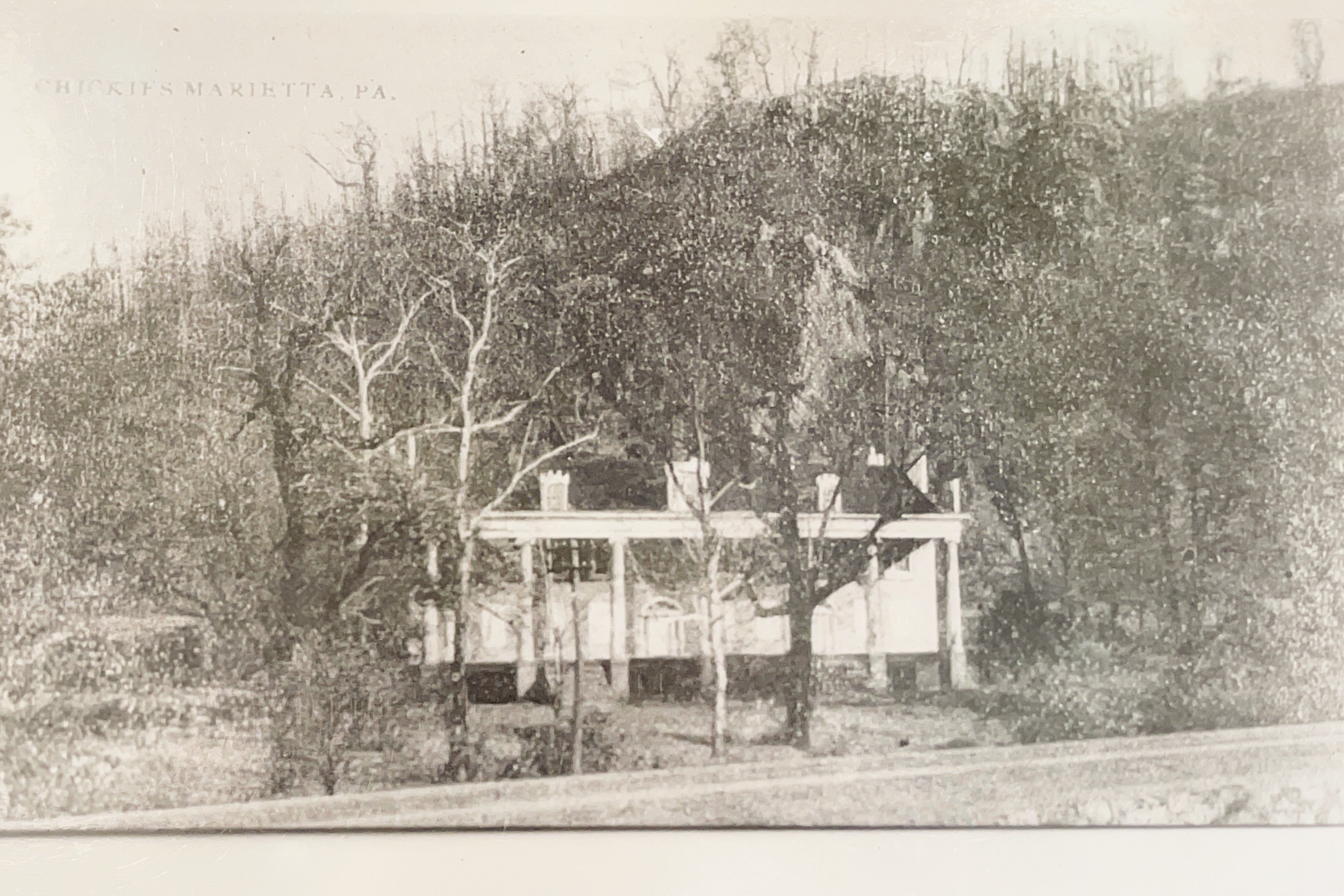
In 1835, Samuel married Mary Ann Hough of Bainbridge and the couple had two sons and two daughters. After their wedding, Samuel and Mary moved to a new home in Marietta at the base of Chickies Rock. In 1833, Samuel designed the Greek Revival-style mansion and named it Rock Retreat. He filled the extensive gardens with native specimens of trees and shrubs.
Academic Achievements
From 1833–1834, Samuel attended natural history lectures in the Medical Department at the University of Pennsylvania. In 1835, Samuel wrote an article for the Lancaster Journal refuting the Great Moon Hoax, a sensational story claiming that there was life on the moon.
In 1836, Henry Darwin Rogers, Samuel’s former professor and Pennsylvania state geologist, put Samuel in charge of geology field operations in New Jersey. In 1837, Samuel returned to Pennsylvania to assist with Professor Roger’s state geology survey. Samuel personally surveyed Dauphin and Lancaster counties.
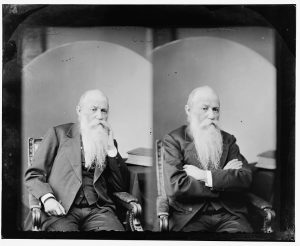
Photo Courtesy Library of Congress
In 1840, Samuel returned to Rock Retreat, where he studied the natural history of invertebrates. He was especially interested in the taxonomy of beetles and freshwater mollusks. In 1842, Samuel established the Entomological Society of Pennsylvania. It was the first scientific society formed to study insects in America. Members of the society published hundreds of descriptions of American insects and gathered the first permanent insect collections in the country. In 1842, Samuel published his first entomological paper and became a Professor of Zoology at the Franklin Institute in Philadelphia. His lectures were the basis for many articles published in natural science journals.
In 1842, Samuel published his Monograph on the Freshwater Mollusca of the United States in the Conchological Section of the Academy of Natural Sciences. Samuel described Scolithus linearis as a trace fossil of some burrowing organism. It was the most ancient organic remains known at the time. Samuel was a member of the Academy of Natural Sciences in Philadelphia. In 1844, Samuel joined the American Philosophical Society. He was one of the founding members and served as its president from 1876-1877.
In 1844, Samuel wrote a paper on freshwater mollusks that defended Lamarckian evolution and transmutation of species. In 1848, U. S. Navy Rear Admiral Charles Wilkes asked Samuel to study the specimens discovered on his expedition of the Pacific Ocean.
Samuel’s eyesight began to deteriorate, but his hearing became remarkably sensitive. He discovered a new sound organ in Lepidopterous insects, which he described in Benjamin Silliman’s American Journal of Science. In 1848, Samuel published an article on his discovery of sound organs in certain moths. From 1851-1852, Samuel edited the Pennsylvania Farmer’s Journal.
Samuel chaired meetings about and wrote award-winning articles on English spelling reform. In 1875, Samuel joined a committee to review Noah Webster’s new spelling and determine necessary changes to the English language. Samuel contributed to Worchester’s Dictionary, the National Dictionary, and Johnson’s Cyclopedia. In 1868, Samuel became the first chair of the Department of Comparative Philology at The University of Pennsylvania.
Samuel was especially interested in the languages of Indigenous people in the U. S. and abroad. He traveled in America and internationally to study many languages. Samuel met visiting tribal delegations in Washington, D. C., and requested Indigenous vocabularies from Western naturalists. In 1849, Samuel established a reputation as an eminent philologist by presenting a paper at the American Association for the Advancement of Science and the American Academy of Arts and Sciences meetings.
Samuel introduced a new, more empirical approach to the study of languages. He studied Indian, Chinese, and English dialects. Samuel published scholarship on the Pennsylvania Dutch dialect. He even wrote the first Pennsylvania Dutch dictionary. During six trips abroad between 1847 and 1875, Samuel investigated multilingual areas in Europe. When studying the human voice in Rome, Samuel determined the vocal repertoire of 40–50 varieties of human speech. Samuel wrote widely on linguistic topics such as the pronunciation of Latin terms for naturalists, the relationship between Chinese and Indo-European languages, the origin and use of prefixes and suffixes in Pennsylvania Dutch, and a general outline of etymology.
Samuel was a Professor of Natural History at the University of Pennsylvania from 1851-1855. Samuel accepted a similar professorship at Delaware College (now the University of Delaware) while lecturing on geology and chemistry at the State Agricultural College of Pennsylvania (Now Pennsylvania State University). In 1851, Samuel visited Texas to explore the presidency of an academic institution there, but he declined the position. On his return trip from Texas, Samuel was offered the position of president of Masonic College in Selma, Alabama. He accepted and held the position from January to October 1852. That same year, he described the insects collected by Captain Howard Stansbury’s 1849 geographical survey of Utah’s Great Salt Lake.
In 1861, Charles Darwin wrote an acknowledgment of Samuel’s ideas supporting the theory of evolution in a preface to his, On the Origin of Species. Samuel authored 150 publications including important works on entomology, conchology, and philology; 120 were scientific and 30 were linguistic. Twenty-eight scientific societies worldwide gave Samuel honorary memberships.
Samuel was fascinated by exercise physiology. On one of his many trips to Paris, Samuel discovered a French gymnastic apparatus and studied the benefits of physical exercise. Samuel’s physician, his brother Edwin, prescribed outdoor exercise. Samuel, therefore, hiked Chiques Rock and did archeology fieldwork there. At Chiques Rock, Samuel discovered and excavated an Indigenous prehistoric settlement. In 1878, Samuel read a report before the American Philosophical Society, about his archaeological fieldwork at a prehistoric cave on his Rock Retreat property in Marietta. He published the report in 1881 as a monograph in the Transactions of the American Philosophical Society.
Samuel became known as the “Sage of Chiques.” Letters of inquiry from all over the world came across Samuel’s desk in Rock Retreat in Marietta. Publishers and editors asked for his opinions on and reviews of books. Writers and teachers inquired about pronunciation, spelling, and natural history facts. Naturalists forwarded packages of shells, insects, or minerals for identification, and farmers sent clays for analysis. Scientific journals and institutions sent invitations to lecture and requests for data.
On Friday, September 10, 1880, Samuel returned home to Rock Retreat from the American Association for the Advancement of Science meeting in Boston. That night, he had a heart attack and died at the desk in his study at age 68. Samuel was buried in the Haldeman family plot at the Marietta Cemetery on West Fairview Avenue in Marietta.
In 1911, when the Haldeman iron business sold their property and demolished their furnaces, they also tore down Rock Retreat. In 2018, the East Donegal Rotary Club and Rivertownes PA USA erected a historical marker on the Northwest Lancaster County River Trail at the location of Samuel’s Greek Revival mansion.
In 1991, the Pennsylvania Historical and Museum Commission dedicated a Pennsylvania Historical Marker to Samuel. It is located along Pennsylvania State Route 441 north of the Locust Grove Estate. In 2018, the Pennsylvania Department of Environmental Protection recognized Samuel as one of forty-one men and women who shaped Pennsylvania’s environmental heritage.
Today the Haldeman Mansion is a public historic site administered by the Haldeman Mansion Preservation Society. In 1967, local historic preservationists formed the Haldeman Society to rehabilitate Locust Grove. In 1977, the Haldeman Mansion was placed on the Pennsylvania and National Register of Historic Places. It is number six on the inventory of historic buildings of the Historic Preservation Trust of Lancaster County.
When Samuel died, the Columbia landscape and portraiture artist Lloyd Mifflin, known as “America’s greatest sonneteer,” wrote these lines:
The Storm Clouds In Memory of Samuel S. Haldeman, L. L. D.
I stand beside the River as the night
Unrolls her sombre curtain o’er the day;
The pyres within the west have paled away
And only left their embers, dimly bright,
To illume the sullen hill-top’s purple height;
Then, from behind the crags, the clouds of gray-
A troop of lions held too long at bay-
Arise from out their antres in their might,
And low along the mountain ridges prowl,
Tossing their shaggy manes with lordly roar;
While, by the lash of lightning still uncowed,
They, raging and rebellious, long and loud,
Send many angry and deep-throated growl
Rumbling along the caverns of the shore!
Meet the Guest Writer Jean-Paul Benowitz
Jean-Paul Benowitz teaches history at Elizabethtown College where he is the Director of Public Heritage Studies. Since 1993 he has been on the faculty teaching in the Departments of History and Religious Studies. He earned his BS in History at Eastern Mennonite University where he wrote his senior thesis on the history of the Horse and Buggy Mennonites of Virginia. He earned his MA in History at Millersville University where he wrote his MA thesis on the history of the Horse and Buggy Mennonites of Pennsylvania and Virginia. He was a scholar in residence at Elizabethtown College’s Center for Anabaptist Studies. During this time, he authored several scholarly articles and books about Pennsylvania Dutch Culture. He teaches community-based learning Honors courses about local history and historic preservation; particularly related to the National Historic District of Marietta and the Chickies National Historic District. These courses have been recognized by the National Collegiate Honors Council where he serves on national committees for teaching and advising honors students and has authored monographs published by NCHC about teaching honors students. He has authored books about local history, articles about the Historic Peace Churches, and a column in the local newspaper in Elizabethtown about local history. Jean-Paul did his doctoral work at Temple University. His dissertation is a biography of U. S. Congressman James Wadsworth Symington who worked in the Eisenhower, Kennedy, and Johnson administrations. Much of Jean-Paul’s scholarship, published works, and public presentations have focused on 20th-century American political history, particularly presidential studies, and international relations. This has been the foundation for Honors courses he teaches about leadership in the Honors Program where he is an academic advisor and where he directs the Office of Prestigious Scholarships and Fellowships. Jean-Paul has been active in the Historic Harrisburg Association and Historic Preservation Trust of Lancaster County. The Historic Preservation Trust of Lancaster County presented Jean-Paul with the Smedley Award which is given to an educator who has shown extraordinary support for historic preservation in Lancaster County.
Meet the Guest Writer Eric Schubert
Eric Schubert, public historian, is an internationally recognized genealogist and forensic genetic genealogist with over ten years of research experience. A recent graduate of Elizabethtown College, he is a current History M.A. candidate at Millersville University. His journey helping individuals through genealogy began at the age of ten and has led to countless reunifications – as well as several solved cold cases. Features include People Magazine, The New York Times, The Washington Post, Good Morning America, and various other publications. His public history work throughout Lancaster County, often related to historic preservation and biography of the Marietta area, has been highlighted in Lancaster Online and Community Press. At Elizabethtown College Eric led a National Trust for Historic Preservation, This Place Matters Campaign, for the National Historic Districts of Marietta and Chickies, celebrating the role these places played, particularly Marietta Restoration Associates, Inc. in establishing a national historic preservation movement in the 1960s and especially in the aftermath of Hurricane Agnes 1972.
Sources
Ancestry.com, “Online Family Trees,” accessed March 12, 2024,
https://www.ancestry.com/search/collections/1030/
Barber, Edwin A.”The Late Professor S.S. Haldeman” The Museum; 1885. MG-344 S. S.
Haldeman Papers, Lancaster County Historical Society.
Biographical Annals of Lancaster County, Pa., Beers, 1903, pp. 144-5.
Brinton, D. G. “Memoir of S. S. Haldeman, A. M., Ph. D., etc.” Proceedings of the American
Philosophical Society. 1881, 19 (108): 279–285.
Croll, P. C. “Famous Pennsylvania Germans; Professor Samuel S. Haldeman, LL.D.” The
Pennsylvania German, v.6 1905.
Gramm, Bertha Sue. The Ironmasters of Marietta and Vicinity During the Period 1848-
1878, Lancaster County Historical Society: Lancaster, PA. 1948.
Haldeman, Horace L. “A Memoir of Prof. Samuel Steman Haldeman. LL. D.” Records of the
American Catholic Historical Society of Philadelphia. 1898, 9 (3): 257–292.
Hamersly, Lewis Randolph, ed. Who’s Who in Pennsylvania; Containing Authentic Biographies
of Pennsylvanians Who are Leaders and Representatives in Various Departments of
Worthy Human Achievement … New York: L. R. Hamersly Company, 1904.
Hart, Charles Henry. Memoir of Samuel Stehman Haldeman, LL.D., Professor of Comparative
Philology in the University of Pennsylvania, Philadelphia: Press of E. Stern & Co., 1881.
Lancaster County Historical Society, S. S. Haldeman Papers.
Landis, Hunt Maragret. “War of the Words, or Which Came First, Chiques or Chickes?” The
Journal of Lancaster County’s Historical Society, 2009, 111 (1): 12-27.
Malone, Dumas, ed. Dictionary of American Biography, New York: Charles Scribner’s Sons,
1932.
Men of Science and Industry: A Guide to the Biographies of Scientists, Engineers, Inventors and
Physicians, in the Carnegie Library of Pittsburgh, Pittsburgh: Carnegie Library, 1915.
Sorensen, W. Conner. “Haldeman, Samuel Stehman (1812-1880), Naturalist and Philologist,”
American National Biography, 1999.
RiverRoots: Rattlesnake Colonel: Thomas Cresap, An American Paradox
River Roots is Susquehanna NHA’s blog series featuring history from York and Lancaster Counties that showcases the Susquehanna River’s historic, cultural, and natural resource contributions to our nation’s heritage.
Susquehanna NHA is pleased to introduce guest blog writer, Michael Maloney. He is a native of York County, Pennsylvania, and recently published a biography of Thomas Cresap.
Four miles south of Wrightsville on Long Level Road, a bronze tablet at the Zimmerman Center for Heritage and a nearby roadside marker commemorate Marylander Thomas Cresap and the site of Cresap’s Fort, where Cresap lived before having his cabin burned to the ground and being arrested by Pennsylvania authorities nearly 300 years ago.
However, the historical markers only hint at the much larger story of a seven-year conflict, sometimes called “Cresap’s War,” where Pennsylvania and Maryland squared off against each other for ownership of a thirty-mile wide swatch of land along the southern border of Pennsylvania. Although the hostilities may not adhere to the modern perception of a war, both colonies mustered militia, planned and carried out attacks, destroyed property, displaced settlers, and took prisoners. To those living there, it most likely felt like a war zone, as they were under constant threat of attack and fear of losing their homes. Several lives were lost and many more ordinary citizens had their lives disrupted.
If you ask almost anyone living in York or Lancaster County today if they know who Thomas Cresap was, most have never heard of him and only a few might mention he had something to do with Maryland. The real answer is complicated and would have depended on who, and when, you asked the question.
In the summer of 1736, if you asked a room of German and Scotch-Irish settlers gathered in John Wright’s ferry house in today’s Wrightsville, you would have been met with a chorus of boos and hisses. Everyone knew the “Maryland Monster” who had been terrorizing Pennsylvania settlers on the west side of the Susquehanna River for the previous five years. However, if you happened to encounter a band of Six Nations warriors passing by Cresap’s trading post at Oldtown in Western Maryland fifteen years later, they knew Thomas Cresap as “Big Spoon,” their friend who always seemed to have a big pot of food ready. In 1755, if you mentioned Thomas Cresap to a British army officer during the French and Indian War, you would have heard yet a third opinion. The officer would not have been impressed with the “Rattlesnake Colonel,” a lowly Colonial militia officer who often mishandled provisions for General Braddock’s troops. At the beginning of the American Revolution, if you asked the same question to anyone in Frederick County, Maryland, you would have been greeted with enthusiastic cheers and huzzahs for Thomas Cresap, who they considered a frontier hero.
Thomas Cresap was all those things and so much more. His professional resume would have included extensive experience as a frontiersman, Indian trader, soldier, ferryman, land speculator, farmer, trailblazer, surveyor, politician, patriot, husband, and father. Had he applied for the job of a Colonial man’s man, he would have been hired on the spot.
Cresap’s War
Cresap’s War had its roots fifty years before he arrived when William Penn received his Colonial charter in 1681, which defined Pennsylvania’s southern border as the fortieth parallel of north latitude. At first glance, this seems to correspond nicely with Cecil Calvert’s charter of 1632, which specified the same fortieth parallel as Maryland’s northern border. However, Penn’s charter was based on grossly inaccurate maps and he erroneously assumed his new colony extended as far south as the Chesapeake Bay.
When commissioners from both colonies met the following year and took their first astronomical measurement in New Castle, now in Delaware, Penn was shocked that the fortieth parallel lay much farther north, placing Pennsylvania’s proposed capital city of Philadelphia within the bounds of Maryland. For the next eight decades, the Penn family and five generations of Calverts attempted to settle the dispute themselves but the controversy was not permanently resolved until Charles Mason and Jerimiah Dixon completed their survey of the Maryland and Pennsylvania border.
In 1730, Maryland began issuing generous land grants on the west side of the Susquehanna River, as far north as today’s Wrightsville and near the actual fortieth parallel, which crosses York County at the Highpoint Scenic Vista & Recreation Area. At the time, the area was still largely uninhabited due to Pennsylvania’s policy of prohibiting settlements on land they had not yet purchased from the Native Americans. Maryland had no such policy, and by establishing tax-paying settlers, they were the first to stake a claim to the disputed area.
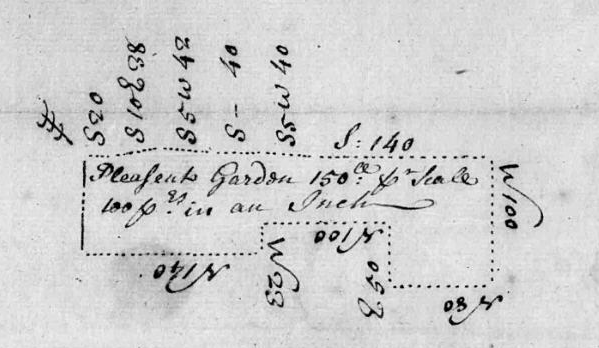
Snippet from Pleasant Garden Patent of 1731
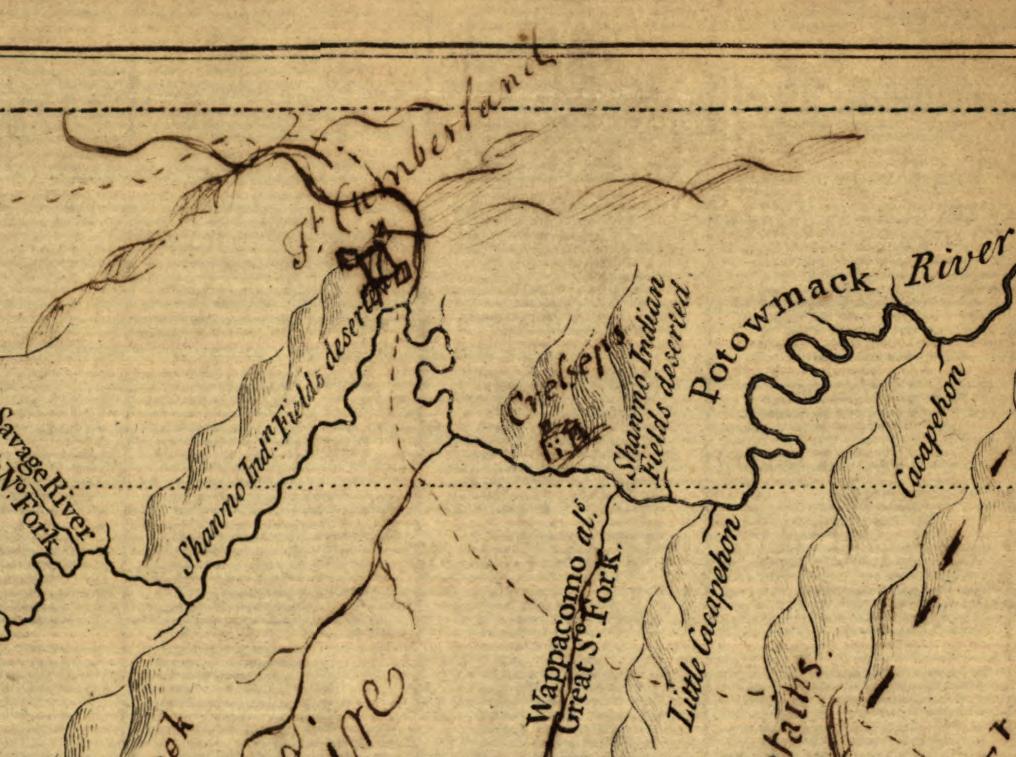
The following year, Thomas Cresap received a Maryland land grant called Pleasant Garden, along the bank of the river below a former Native American village. Although the exact location of his cabin, often called “Cresap’s Fort,” was lost to history when the Susquehanna and Tidewater Canal was constructed one hundred years after Cresap left the area, the Zimmerman Center for Heritage on Long Level Road, built by John Meyer around 1740, is located on Cresap’s Pleasant Garden tract.
Shortly after Cresap settled at Pleasant Garden with his wife Hannah and their two children, he was appointed as a Baltimore County Justice, received a license to operate a ferry across the Susquehanna at Blue Rock, obtained a captain’s commission in the Maryland militia, and was encouraged to recruit other Maryland settlers to the area. He immediately clashed with Pennsylvania authorities in Lancaster County, settlers on the west side of the river, and the local Conestoga tribe, who still used the land around their former village for hunting and gathering food.
The next seven years were a continual cycle of retaliatory arrests, armed assaults, property destruction, and harassment of settlers, with both Maryland and Pennsylvania flexing their jurisdictional muscles in an attempt to control the contested area. On several occasions, Thomas Cresap and the Maryland militia confronted volunteers from Lancaster County, but backed down before any serious violence erupted. In 1734, during one of the many failed attempts to capture Cresap, a vigilante posse attacked his cabin and in the skirmish he shot and killed a Pennsylvanian named Knowles Daunt.
An important part of Maryland’s strategy was to persuade the German settlers on the west side of the river to identify as Marylanders. Although a few held provisional land patents from Pennsylvania, called Blunston Licenses, most were squatters who had settled without permission. In exchange for paying taxes to Maryland, Cresap promised them deeds for their properties, which he never delivered. However, after Pennsylvania purchased the land west of the river from the Six Nations in 1736, the Germans decided to defect to Pennsylvania, hoping to gain legal ownership of their property and liberate themselves from Cresap’s strong-arm tactics. Maryland authorities were infuriated and issued arrest warrants for sixty settlers, triggering renewed violence against the German settlers.
Pennsylvania finally had enough and ordered Cresap’s arrest. In late November 1736, Sheriff Samuel Smith and a large posse from Lancaster County surrounded Cresap’s cabin. After a day-long siege and exchanges of gunfire and insults, his cabin was set afire. As Cresap, his family, and his allies escaped from the flames, one of his indentured servants, Loughlin Malone, was killed by the sheriff’s men. The Maryland Monster was finally captured and taken to jail in Philadelphia, where he sarcastically commented that it was the one of the prettiest cities in Maryland. He remained locked up until early 1738, when King George II ordered that all hostilities should cease, prisoners on both sides should be released, and the Maryland and Pennsylvania border would be located on an east-west line fifteen miles south of Philadelphia.
After Cresap was released from jail and returned home, he realized he had nothing left to fight for since Pleasant Garden was now officially outside the bounds of Maryland. Not wanting to be a subject of Pennsylvania, Cresap moved his family to the frontier of Western Maryland, briefly settling near the future town of Hagerstown, Maryland, before relocating farther west to an abandoned Shawnee Village at today’s Oldtown, Maryland. Cresap soon established a trading post and became a well-known figure on the frontier, providing a place of refuge for settlers in time of war. He earned himself the nickname Big Spoon by supplying provisions to the Native Americans passing through Oldtown.
American Frontier
1747 Map of Western Maryland showing Cresap’s homestead
When the French and Indian War spread across Western Maryland, Colonel Cresap was in the middle of the action. He was placed in charge of transporting the prisoners taken by George Washington in the opening shot of the war at Jumonville Glen, and the following year, Cresap and a Delaware Indian named Nemacolin blazed a trail from Western Maryland to today’s Pittsburgh for General Braddock’s 1755 expedition to capture Fort Duquesne. The British officers who camped at Oldtown were not particularly impressed with Cresap, especially after he supplied spoiled food to the troops, and referred to him as a Rattlesnake Colonel, a rank which they felt could be earned by anyone in the colonies for simply killing a rattlesnake.
Cresap amassed thousands of acres of land in Western Maryland and was a founding member of the Ohio Company of Virginia, a land speculation company that was determined to acquire and settle a large land grant in the Ohio Valley, in today’s West Virginia and southwestern Pennsylvania. In 1757, he entered politics and served as a representative in the Lower House of Maryland for more than a decade. Despite being in his early 80’s when the Revolutionary War broke out, Cresap was an active member in the Frederick County Committee of Observation, a local organization designed to enforce boycotts of British goods, solicit funds for arms and ammunition, and identify British loyalists. An ardent patriot, Cresap formed a local Sons of Liberty Chapter in Frederick, Maryland.
Thomas Cresap died in 1787 at the age of ninety-three. Whether his legacy is viewed as positive or negative depends largely on perspective. Although there is no doubt his influence in the development of the Ohio Valley was significant, his contributions remain a largely misunderstood side note in American history, often overshadowed by his controversial actions over five decades to redefine the borders of Maryland, Pennsylvania, and Virginia. Few individuals did more, over such a long period of time, to further Colonial America’s westward expansion. History has shown that Cresap’s fervent commitment to the interests of Maryland was a product of the narrow-minded sectionalist views of his time, emphasizing his loyalty to one colony rather than the country as a whole. Whatever his motives, he remained true to his convictions, whether in support of Maryland, Great Britain, or America, making him both famous and infamous – a true American paradox.
Author Information
Michael Maloney is a native of York County, Pennsylvania, and currently resides with his wife in Red Lion. Now retired, he was the Director of Technical Services for Lifetime Brands (the former Pfaltzgraff Company) since 2005. Although he grew up in York, both his parents and many of his relatives are from Marietta and Mount Joy in Lancaster County. Consequently, he spent many summers along the Susquehanna River at his grandparent’s house, exploring the river shore and the surrounding hills.
After learning of a gravesite behind the Accomac Inn, he was curious to research the Accomac ferry crossing, the town of Marietta, and the murder of Emily Myers at the hand of John Coyle, Jr. on Decoration Day, 1881. His love of local history led him to write his first book, Across the River, Murder at Accomac, released in 2012 for the 200th anniversary of the establishment of the borough of Marietta.
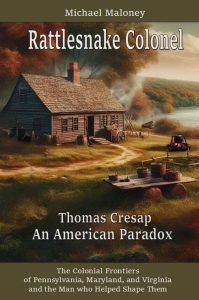
His second non-fiction book, Rattlesnake Colonel Thomas Cresap – An American Paradox, is a biography of Thomas Cresap’s contradictory and often controversial life. Cresap’s life experiences in Pennsylvania and Western Maryland are used to narrate the complicated political and military conflicts of eighteenth-century Colonial America in a comprehensive yet understandable way. For more information, presentation schedule, where to buy, and bonus content, visit michaelmaloneybooks.com!
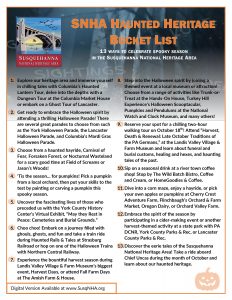
Explore our heritage area and immerse yourself in seasonal adventures with Susquehanna NHA’s Haunted Heritage Bucket List! From heart-pounding excitement to delightful family outings, there is truly something for everyone to enjoy. Visitors of all ages can experience the thrill of the season as they navigate through 13 tasks that celebrate the season at local businesses, events, and landmarks!
Fall is the perfect time to embrace a little spookiness. Get ready for frightfully fun experiences full of folklore, legends, haunted heritage, and spooky adventures.
If spooky season isn’t for you, choose from harvest-themed activities throughout our heritage area. Get outside for an autumn foliage hike, experience fall on the farm traditions, take the family apple and pumpkin picking, or enjoy the tastes of the season!
The Susquehanna NHA Haunted Heritage Bucket List is active from September 1, 2024, through November 30, 2024. Complete at least five items to receive a uniquely-designed Susquehanna National Heritage Area sticker! Share your Bucket List experience by snapping photos and posting them to social media. Be sure to tag @SusqNHA in your post.Download your Bucket List to get started! Pick up a paper copy at Columbia Crossing River Trails Center, 41 Walnut Street, Columbia, PA or Zimmerman Center for Heritage, 1706 Long Level Road, Wrightsville, PA.
Susquehanna NHA’s Haunted Heritage map is great for those who want to learn more about things that go bump in the night in the Susquehanna National Heritage Area!
Susquehanna Discovery Center & Heritage Park
August 2024 Project Update
Pete Miele, Senior Project Leader
As we savor the last days of summer, I’m excited to share the latest updates from our ongoing projects to transform the historic Mifflin Farm into the Susquehanna Discovery Center & Heritage Park.
Since July, momentum at Mifflin Farm has quickened. We’ve secured construction bids to begin the initial public access improvements, including a new driveway, parking area, and walking paths. These enhancements are set to be completed by the end of the year, paving the way for tours and events as early as late winter. Our visitor engagement team is busy crafting a schedule of regular tours and programs for next spring and summer, ensuring that visitors can experience this remarkable piece of history firsthand. In mid-August, we received the news that the PA Outdoor Corps will assist us next summer. A youth crew will spend a week extending a walking path down to the pond and around it, making it easier for visitors to explore this historic land.
In tandem with these developments, we’re focusing on essential site maintenance. After cleaning out the barn last year, our attention now turns to the home and surrounding grounds. This work includes clearing vegetation, removing outdated fixtures, and prepping the house’s interior for small group tours. We’ve also contracted a construction firm to stabilize the leaning corn crib and repair the roof and floor of the main barn area.
We’re not just stopping there. We’re aiming for national recognition of this historic site. In July, we applied to list the home on the Underground Railroad Network to Freedom by the National Park Service and received an updated Determination of Eligibility from the Pennsylvania State Historic Preservation Office for listing in the National Register of Historic Places. Additionally, we’ve applied for a grant from the National Park Service to fund a Historic Structures Report for the home, a vital step in understanding its appearance during its days as an active Underground Railroad station and providing a guide for future rehabilitation. We have also begun conversations with the International Coalition of Sites of Conscience, a worldwide network of museums and historic sites dedicated to promoting human rights. We look forward to making Susquehanna Discovery Center & Heritage Park part of this association.
Our collaboration with Mahan Rykiel Associates (MRA) has also kicked into high gear. In July, our team met with Scott Scarfone, our lead contact at MRA, to map out the year-long Master Planning/Interpretive Framework process. Later this month, key stakeholders, including task force members, board members, funders, and government officials, will gather with MRA consultants at Columbia Crossing River Trails Center for a two-day kickoff meeting. Together, we will further develop our vision for the Susquehanna Discovery Center & Heritage Park.
Thank you for your support of this special project. For the first time in over 200 years, guests will soon be able to safely access and discover the critical role this property played in the fight for freedom.
Heritage Area Announces Peter Miele as its new Senior Project Leader
The Susquehanna National Heritage Area (SNHA) has announced the hiring of Peter Miele, effective July 8, 2024. Mr. Miele will serve as the new Senior Project Leader for the Susquehanna Discovery Center project at the historic Mifflin site.
Miele will primarily be responsible for coordinating the planning, design, development, and funding of the Susquehanna Discovery Center & Heritage Park (SDC). SDC is a $20+ million, 5-10-year, multi-phase initiative to redevelop the historic Mifflin house and farm near the Susquehanna River in Wrightsville, PA as a new gateway visitor destination. The site includes 90 acres of scenic and historic landscape and buildings associated with important Underground Railroad and Civil War history.
“Peter brings an excellent mix of academic credentials and on-the-ground management experience in a museum and education setting that shares Civil War and Underground Railroad heritage with the Mifflin site. We look forward to welcoming Peter and working with him to develop the Susquehanna Discovery Center & Heritage Park,” said Mark Platts, President & CEO of the Susquehanna National Heritage Area.
Miele will continue to serve as the President & Executive Director of Seminary Ridge Museum and Education Center until June 30, 2024, where he worked since 2014 to restore, preserve and maintain national historic Civil War properties, architecture, and historic legacies of Seminary Ridge. Miele’s work experience also includes positions at Shippensburg University of Pennsylvania and Northern Valley Regional High School in Demarest, NJ.
The Susquehanna National Heritage Area is a designated State and National Heritage Area focused on preserving, interpreting, and sharing the natural, cultural, and historic resources of Lancaster and York Counties and their shared landscape along the Susquehanna River. Through collaborative efforts, the National Heritage Area seeks to celebrate the region’s history and foster a deeper appreciation for its unique communities and landscapes.
234 N. Front St., Wrightsville
Sunday, June 29th from 4 PM-9 PM
Live Music from Dill Weed!
Bring a lawn chair or blanket! Enjoy music from Dill Weed – a fun and folksy trio. Historic Wrightsville Incorporated will be selling some of the best burgers, hot dogs, and more starting at 5 PM! CASH ONLY. John Wright Restaurant’s Pizza Patio will be open from 4 PM to 9 PM.
8:30 PM – 9 PMIgnite Finale
The fiery tradition of lighting the piers on fire at dusk continues! Join us at 8:30 PM with a fire performance from The Teine Guardians. They will amaze you with fire spinning, breathing and even eating! Then, at 8:45 PM, the story of the bridge burning will be read as the first three piers over the Susquehanna River are lit ablaze.
Donate to support Susquehanna National Heritage Area and Rivertownes PA USA to keep doing Riverfest!!