
RiverRoots: PA German Influence on American Identity
River Roots is Susquehanna NHA’s blog series featuring history from York and Lancaster Counties that showcases the Susquehanna River’s historic, cultural, and natural resources contributions to our nation’s heritage.
They came seeking opportunity, faith, and freedom, but Pennsylvania’s German immigrants left a far greater mark than they ever imagined. Pennsylvania Germans’ ingenuity shaped the tools that powered a young nation. Discover how the Conestoga wagon and the Pennsylvania long rifle, born of Pennsylvania German skill and adaptation, helped define the way America moved, fought, traded, and even drove on its roads. Susquehanna NHA is pleased to introduce guest blog writer and curator of Landis Valley Village & Farm Museum, Jennifer Royer. Landis Valley Village & Farm Museum, part of the Pennsylvania Historical & Museum Commission, is a living history museum dedicated to preserving Pennsylvania German culture and rural heritage from 1740 to 1940.
Pennsylvania German Influence on American Identity
German speakers were the largest European immigrant group to come to Pennsylvania in the 18th century. 75,000 German speaking people came to Pennsylvania from 1683 through 1820. The first permanent Mennonite settlement in North America was established in Germantown, Pennsylvania in 1683. By 1790, 72% of the white population of Lancaster County was ethnic German. Most were from Lutheran or German Reformed faiths. Roughly 2% were Mennonites and a lesser percentage were Amish.
There were two waves of German immigrants arriving in 18th century Pennsylvania. The first wave from 1708-1720 included the Mennonites and Dunkards. The Mennonites came from Switzerland. Dunkards came from Krefald and Wittgenstein in Prussia. The second wave from 1720-1750 included Reformed, Lutherans, and Moravians from countries or states bordering the Rhine River.
They came to Pennsylvania to be a part of William Penn’s tolerant colony. Initially, most settled in a regional arc of available land between the first British and Scandinavian settlers in the southeast and the edge of the Appalachian Mountains. They emigrated for various reasons with many of their motivations bound up in the economics of survival and betterment. They brought central European cultural practices and spoke various German dialects. Many pursued trades in the country or became farmers.
As the German immigrants adapted to the challenges and opportunities of Pennsylvania, they utilized tools they had brought along or resurrected and amended Old World tool prototypes. In several instances, their distinctive tool technologies and the ways they modified them had a profound effect not just in southeastern Pennsylvania, but also upon a larger part of America. They exerted influence directly through their migrations west and south. Pennsylvania Germans became the principal agents of the development and dissemination of some of early America’s most iconic technological adaptations, including the Conestoga wagon and the long rifle.
The Conestoga Wagon
The Conestoga Wagon was a freight wagon, developed by Pennsylvania Germans to take goods from the lower Susquehanna Valley to urban markets. The wagons were built in Lancaster County, starting before 1750, to transport agricultural products and rural-made goods over primitive roads to Philadelphia, Baltimore, and large towns. Designed as freight haulers, they compare well with the tractor-trailers of today. Fully loaded, they required 6 horses to pull them. There were no seats in the wagon bed, which was devoted entirely to cargo such as barrels of grain or flour, cured meats, kegs of whiskey or cider, woven linen, hemp fiber, tanned animal skins, and lumber. For the trip home the wagon might carry imported goods or products crafted by specialized urban craftsmen.
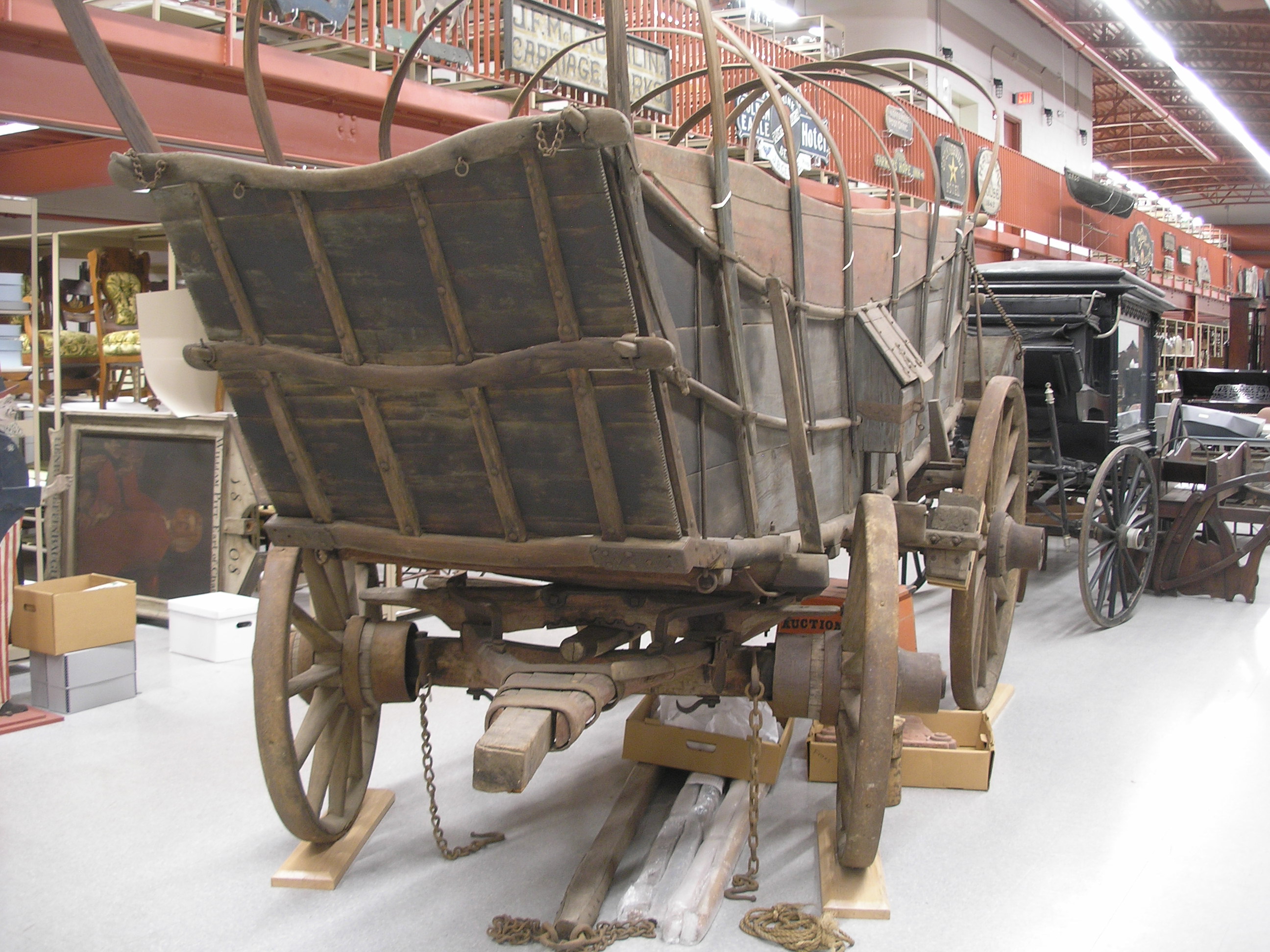
Conestoga wagon owners and horse breeders developed a draft animal, known as the Conestoga horse, with certain traits. They were long-legged, sturdy in the chest with short arching necks, calm in disposition, and tended to be black. They were highly regarded for their strength, speed, endurance, and muscular flesh. Their exact bloodlines were forgotten by the mid-1800s, and they never reached the point of a true separate breed. They were known through the Northeast Region as very valuable and desirable horses, raised by Pennsylvania German farmers, who fed them an especially rich diet of grains. Along with the disuse of the Conestoga wagon, they were allowed to die out.
For over a century, Conestoga Wagons were the lifeline of inland commerce, inspiring the first turnpike in 1794 and resulting in the creation of improved roads, such as the Great Wagon Road. Also, the number of taverns, blacksmiths, and horse-watering places increased along these routes with the opportunity to profit from wagon drivers’ needs. Conestoga Wagons were eventually replaced by faster and more efficient railroads and canal boats in the 1850s.
Conestoga Wagons were not prairie schooners, but their design did influence the smaller, lighter wagons that went out west. They were also used as supply wagons for the Continental Army during the Revolutionary War.
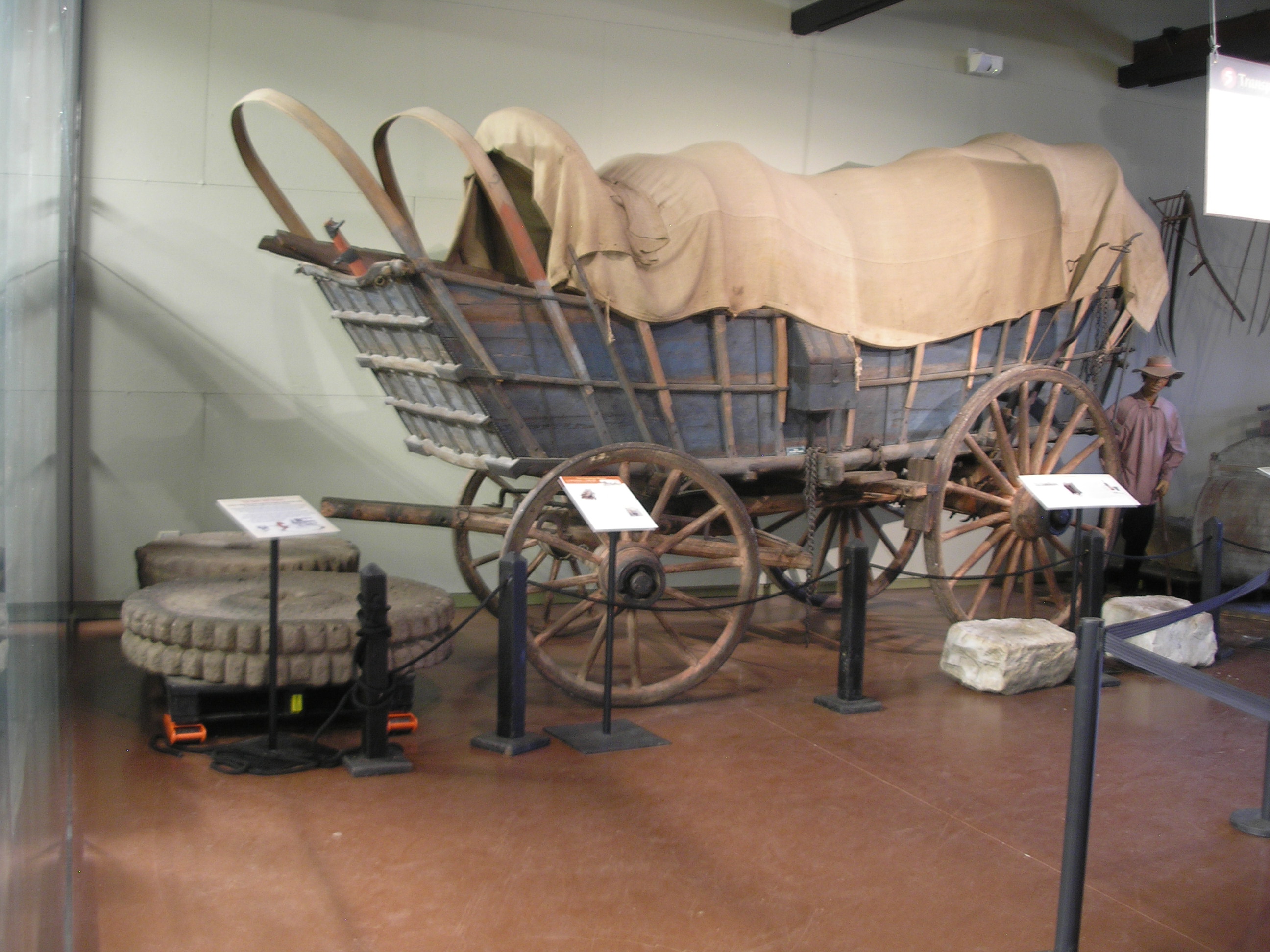
Conestoga Wagons are the primarily reason Americans drive on the right side of the road. The wagon driver rode the horse closest to the left wheel, walked, or sat on the lazy board—a pull-out plank that some wagons had below the toolbox. Since the tradition of German-speaking people from Central Europe was to drive a horse team from the left side, wagon makers and buyers oriented the Conestoga Wagon to that custom. The brake lever, all-purpose ax, lazy board, brake chain, and tar bucket (for axle grease) were all placed on the left side. The driver controlled the team with a single long “jerk line” running to the lead horse at the left front. By 1795, the Philadelphia and Lancaster Turnpike Road required traffic to keep to the right.
There are also sayings within American culture that developed due to the use of Conestoga Wagons. Conestoga horses wore sets of bells and if a wagon broke down and the driver needed help from another wagon, they would give their rescuer some of their bells as a thank you in appreciation. “I’ll be there with bells on” meant you and your complete would be there quickly and without any problems.
Pennsylvania Long Rifle
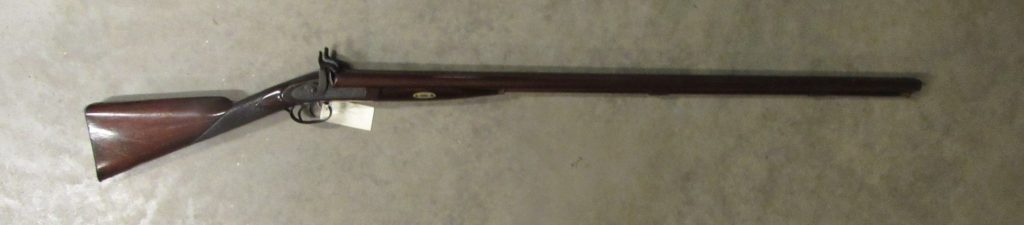
The Pennsylvania Germans also influenced the culture of America with the development of the Pennsylvania Long Rifle. During the 1700s Pennsylvania gun makers in colonial Lancaster County developed the long rifle. Their invention—a truly American tool—won broad popularity for its accuracy, efficiency, and handsome utility. Its use spread rapidly on southern and western frontiers. By the late 1700s skillful gun makers with unique stylistic traits were creating long rifles of exceptional form and finish that constituted an American art form.
During the 1700s a convergence of factors led Lancaster County gun makers to develop the long rifle. Most of them or their families had come from Central Europe. There, they had been familiar with the jaeger or hunter’s gun—a shorter firearm—enhanced by carving the wooden stock and decorating the metal components by forging, filing, and chisel engraving. They also knew the technique of rifling the interior of the gun barrel. That process cut a spiral groove that put a spin on the fired projectile, giving it a more accurate path.
Pennsylvania’s natural resources—excellent iron ore, extensive forests, powerful streams, abundant fertile land, and bountiful game—offered a cradle of opportunity. A higher number of forges and furnaces than in any other colony turned out tough, malleable iron. Forests held both wood for gunstocks and fuel for smelting and metal working. Streams offered power for rifle makers and their material suppliers. Abundant, fertile land nurtured both native game and immigrants who wanted to cultivate the ground and put wild meat on their table.
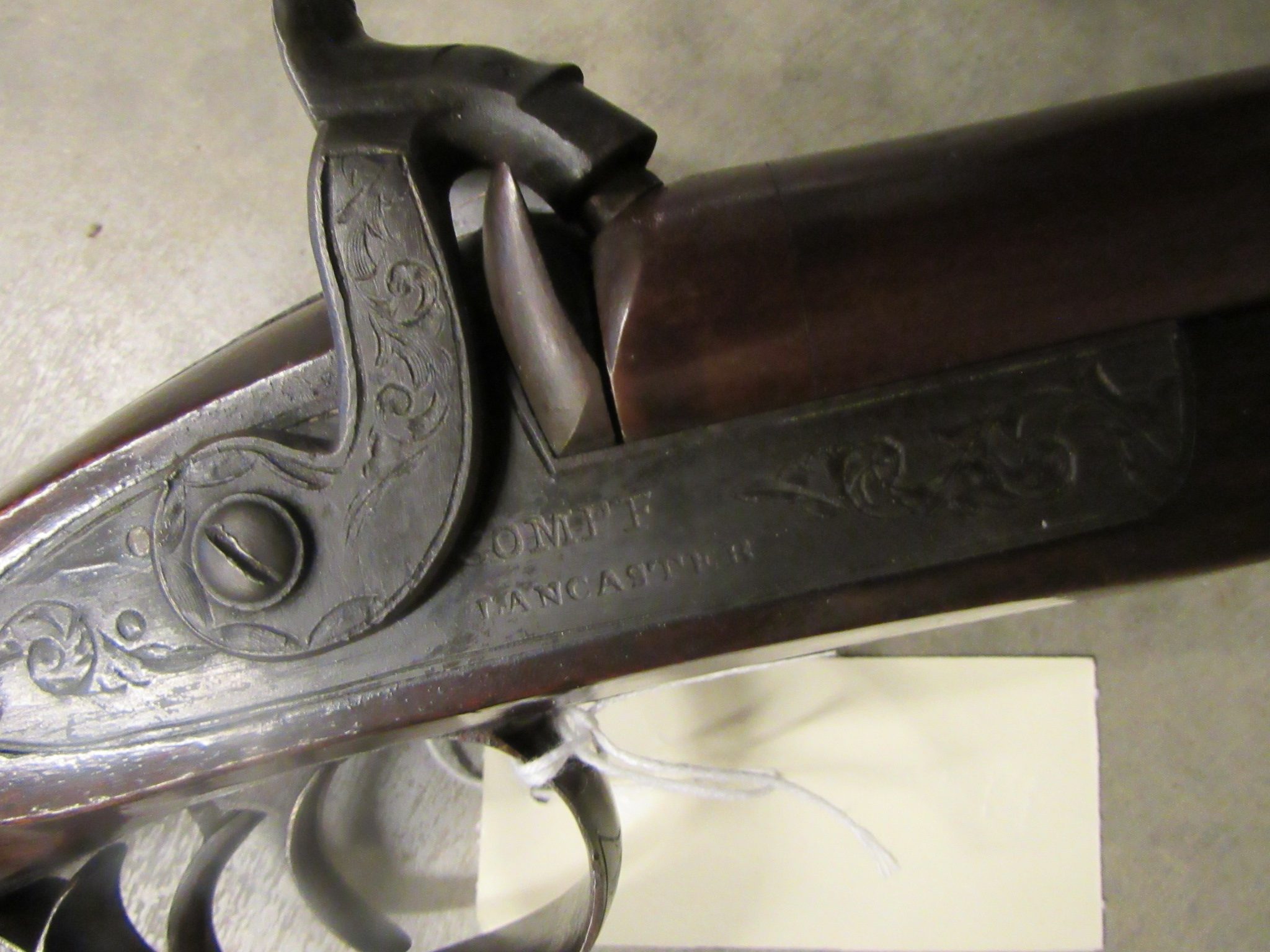
Many in the Susquehanna Valley needed, and could afford, firearms better adapted to the American landscape for taking game or defending themselves and their families. Therefore, the Pennsylvania Long Rifle was quickly adopted, and settlers spread its use south through the Appalachian valleys and westward across the Ohio River. The rifle developed here excelled in the hands of frontiersmen, and it eventually became known as the Kentucky Long Rifle, which is the incorrect name – according to those native to Pennsylvania.
Besides private use, these rifles were used during the Revolutionary War. Gun makers, such as Jacob Dickert, secured and fulfilled military contracts to supply multiple firearms. These contracts not only enhanced their individual earnings but also projected the reputation of Lancaster County rifles far beyond the lower Susquehanna Valley, impacting the development and expansion of America, as the Conestoga Wagon as did thanks to the Pennsylvania Germans.
Learn More
Visit the Landis Valley Village and Farm Museum to explore the influence of Pennsylvania Germans on America.
Start your journey Where History Runs Deep on our American Craftsmanship Trail. From workshops to historic industries, each stop reveals the skill, creativity, and tradition that define craftsmanship in our national heritage area!